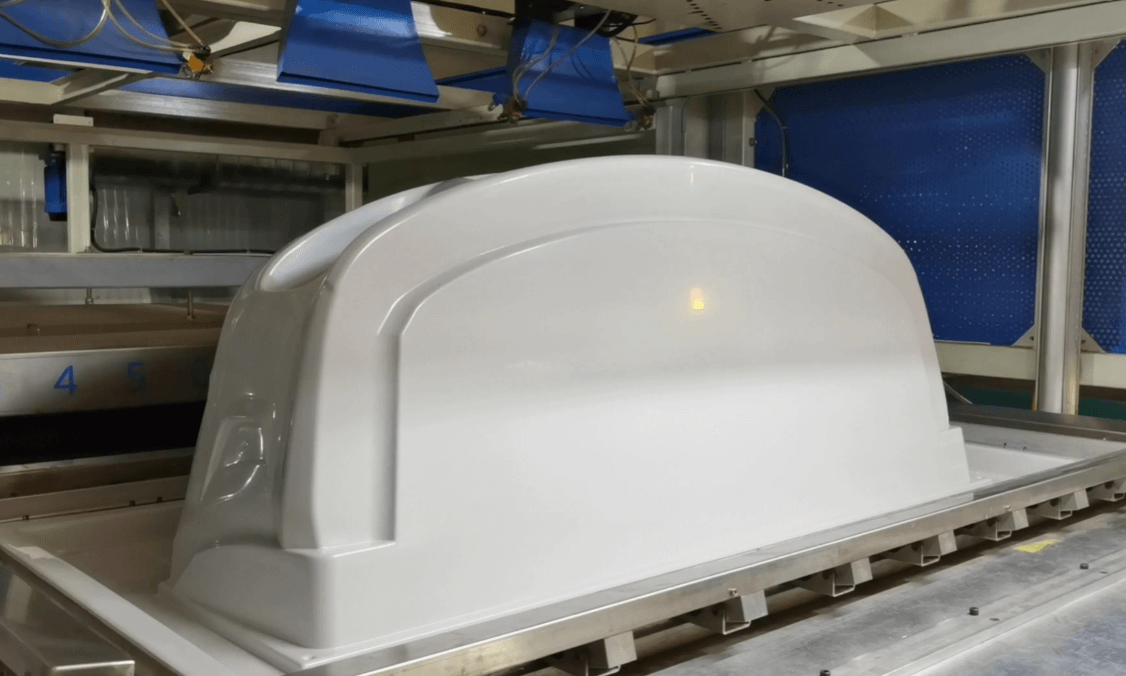
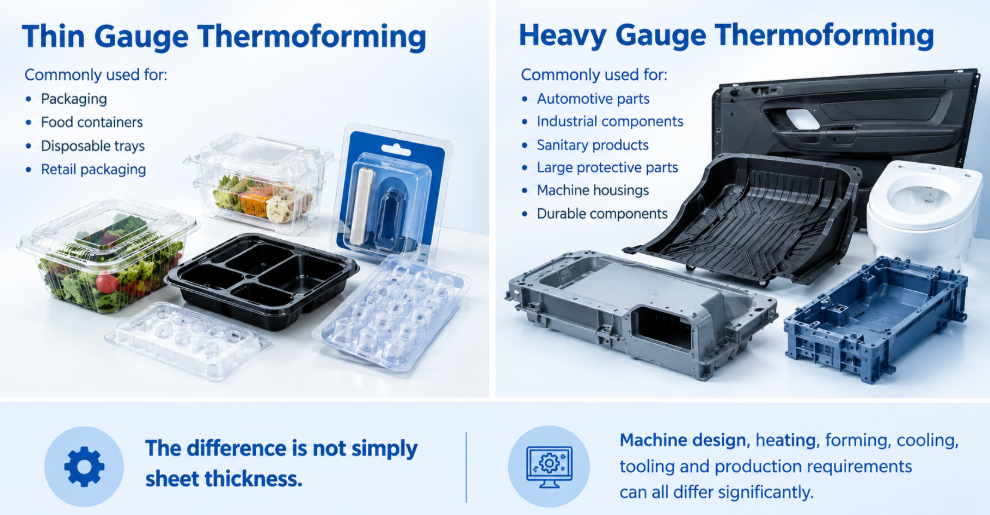
Heavy gauge thermoforming is a plastic manufacturing process in which relatively thick thermoplastic sheets are heated and formed over or against a mold.
Compared with thin-gauge packaging thermoforming, heavy gauge thermoforming is typically used to manufacture larger and more rigid products.
The process can use vacuum, pressure, mechanical movement or a combination of forming methods depending on the product.
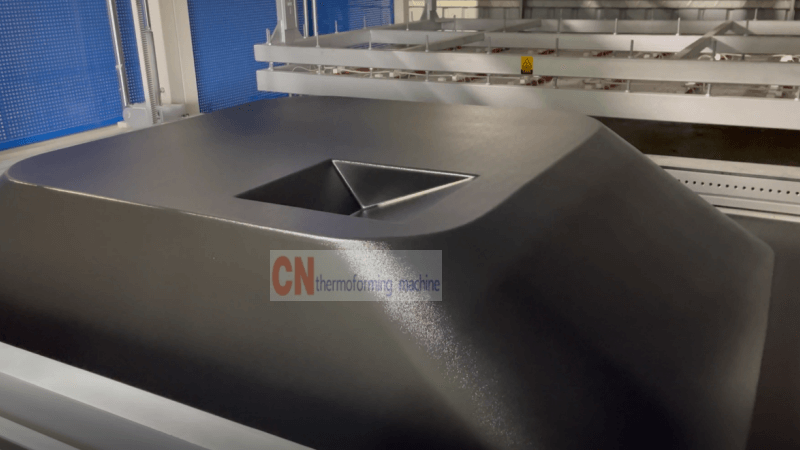
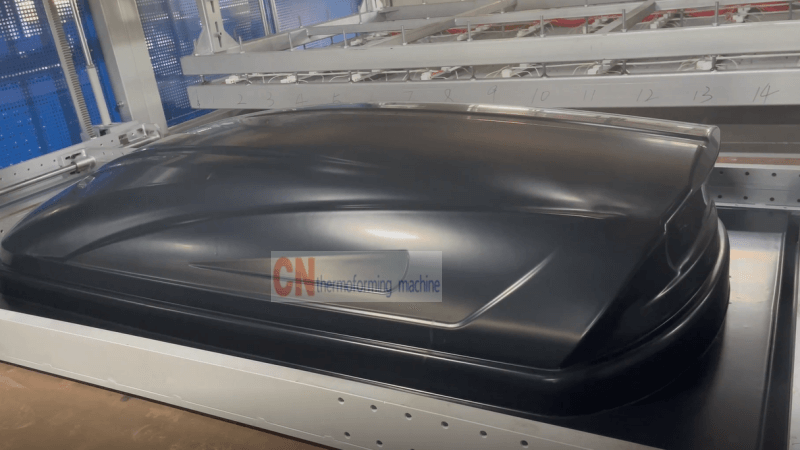
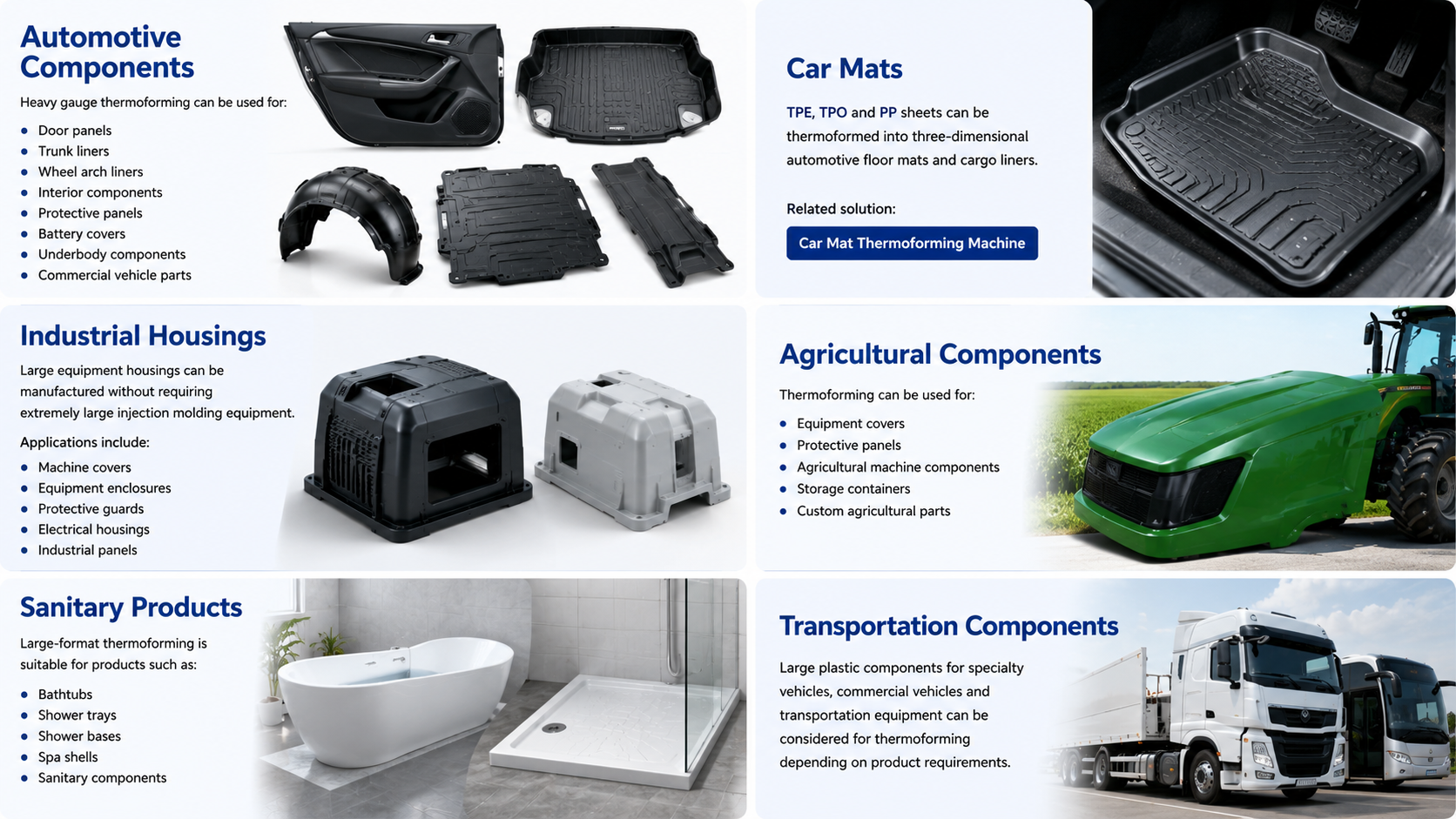
Typical heavy gauge applications include:Automotive components,Car mats,Industrial housings,Machine covers,Agricultural components,Transportation parts,Bathtubs,Shower traysj,Large protective covers,Custom plastic components.
The machine must provide sufficient heating capacity, forming force, vacuum performance and structural rigidity to process the selected material and product.
| Parameter | Typical Configuration |
|---|---|
| Forming Process | Vacuum forming / customized |
| Sheet Thickness | Approx. 0.5–15 mm |
| Maximum Forming Area | Up to approx. 4500 × 2000 mm |
| Forming Depth | Customized according to product |
| Heating System | Multi-zone infrared / ceramic heating |
| Temperature Control | High-precision zone control |
| Drive System | Servo / pneumatic depending on application |
| Control System | PLC + HMI |
| Vacuum System | Industrial high-capacity vacuum |
| Clamping | Automatic perimeter clamping |
| Automation | Manual, semi-automatic or customized |
Actual specifications depend on the machine configuration and application.
Large plastic components can become expensive and technically difficult to manufacture using conventional injection molding.
Heavy gauge thermoforming can provide an alternative for suitable products.
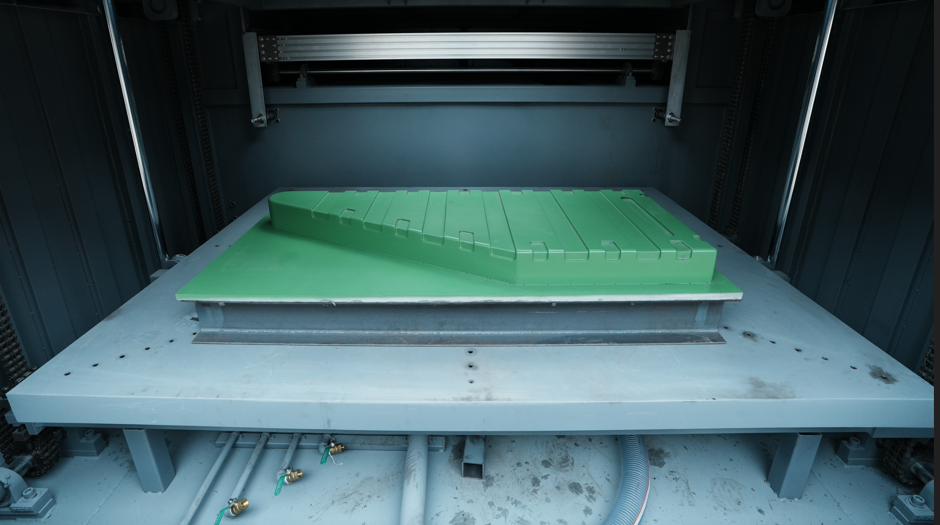
Large components can be formed using a relatively simple mold structure compared with large injection molds.
For many applications, thermoforming molds can be manufactured at a lower initial cost than large injection molds.
Tooling can often be developed and modified more quickly, making thermoforming attractive for new products and changing product designs.
Heavy gauge thermoforming is suitable for prototypes, low-volume production, medium-volume production and selected higher-volume applications.
Large sheets can be formed into substantial components while maintaining an efficient manufacturing process.
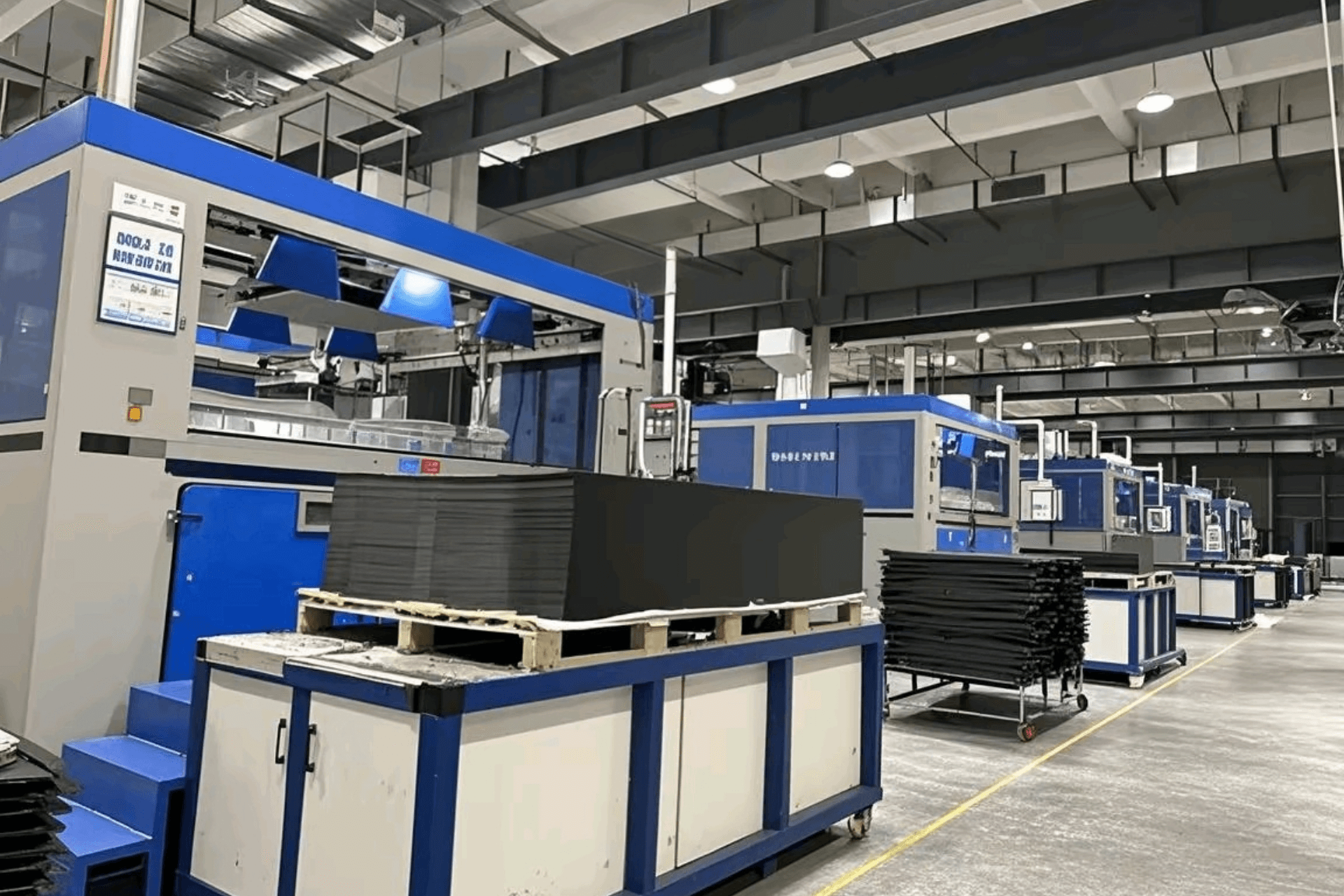
A machine designed for thick-sheet forming needs to address several challenges that are less critical in thin-sheet applications.
Thicker sheets require more energy and more time to reach the appropriate forming temperature.
The heating system must provide sufficient power and uniform temperature distribution across the sheet.
The surface temperature is not the only consideration.
Heat must penetrate through the sheet thickness sufficiently to create a formable temperature profile.
Poor heating control can result in:
Large and deep molds can contain significant air volume.
A suitable vacuum system must evacuate this air quickly enough to achieve stable forming.
Large sheets and molds create substantial mechanical loads.
The machine frame, forming table and clamping structure therefore require sufficient rigidity.
For complex products, forming speed and movement can influence material distribution.
Servo-controlled movement can provide programmable and repeatable motion where required.
Heating is one of the most important stages of heavy gauge thermoforming.
The objective is not simply to make the sheet hot.
The objective is to achieve a suitable temperature distribution throughout the sheet so that the material can stretch and conform to the mold without excessive thinning or other forming defects.
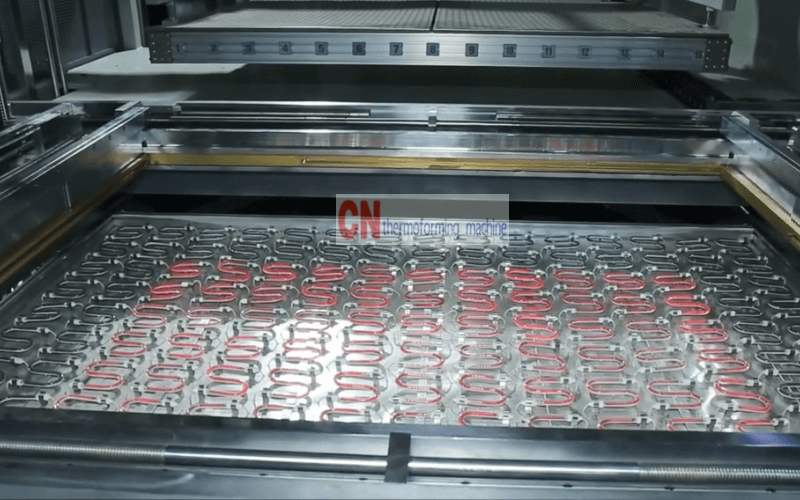
CN thermoforming machines can be configured with multi-zone heating systems.
Depending on the machine design and application, heating technologies can include infrared and ceramic heating elements.
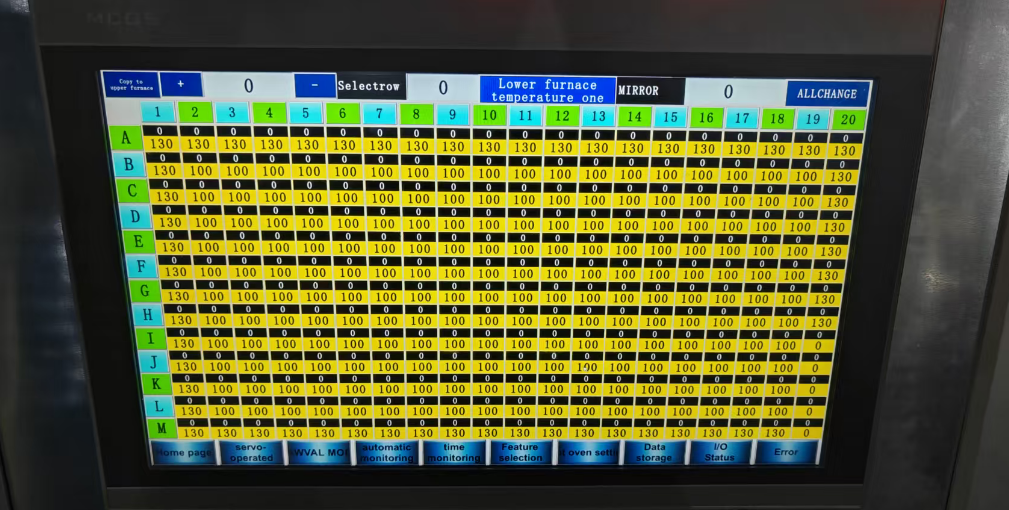
Different areas of the sheet can require different temperature settings.
Zone control allows operators to compensate for:
High-precision temperature control helps maintain process stability.
Under suitable operating conditions, the control system can achieve approximately ±1°C temperature-control accuracy.
Actual sheet temperature depends on material, thickness, heater configuration, ambient conditions and process settings.
The vacuum system is responsible for removing air between the heated plastic sheet and mold surface.
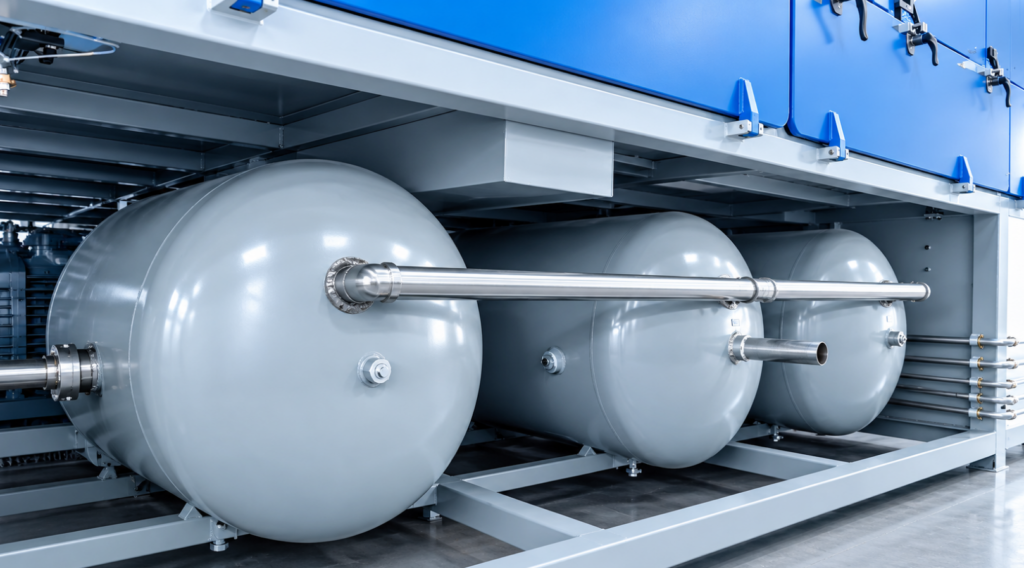
For heavy gauge and large-format applications, vacuum performance becomes particularly important because the mold may have:
The vacuum system can be selected according to:
For suitable large-format machines, high-capacity industrial vacuum pumps can be integrated into the system.
Servo-driven movement provides greater control over machine motion than fixed-speed mechanical movement.
Depending on machine configuration, servo control can be used for:
Operators can adjust parameters such as:
This can help optimize forming conditions for different products.
The PLC system coordinates the main machine functions.
The operator interface can manage:
Production parameters can be adjusted and stored according to machine configuration.
A centralized control system also simplifies operation when multiple forming parameters must be coordinated during each cycle.
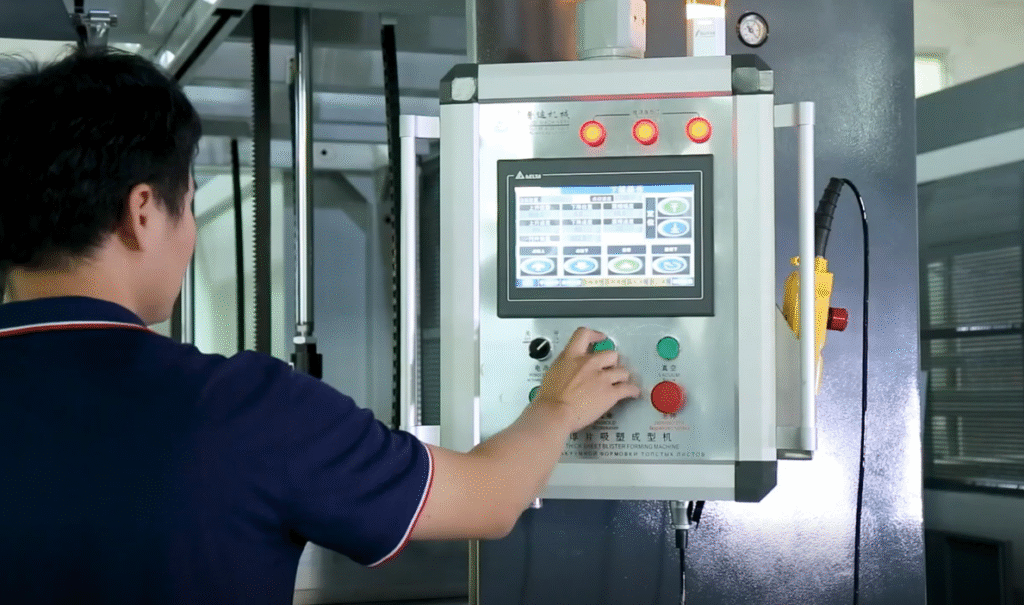
A reliable clamping system is essential for heavy gauge thermoforming.
The sheet must remain securely positioned during heating and forming while allowing the material to stretch naturally into the mold.
Depending on the application, CN machines can use pneumatic or electrically controlled perimeter clamping systems.
The clamping configuration can be selected according to:
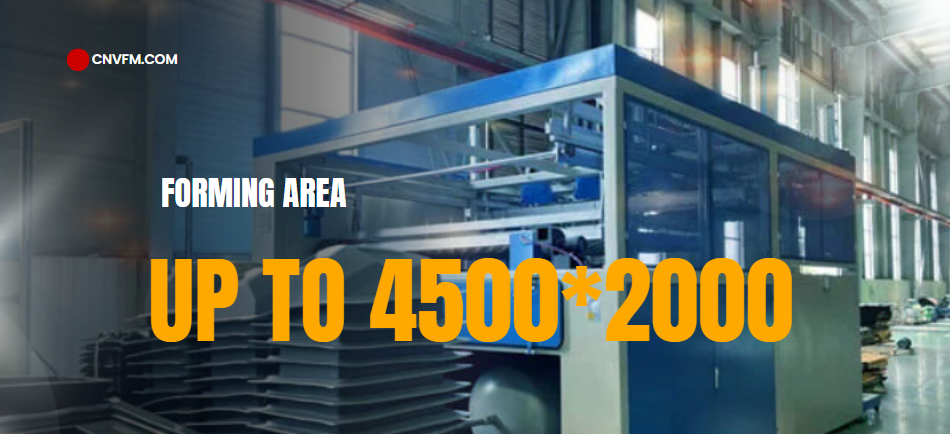
Large products require sufficient forming area not only for the finished product but also for:
CN Thermoforming Machine can engineer large-format systems with forming areas up to approximately:
4500 × 2000 mm
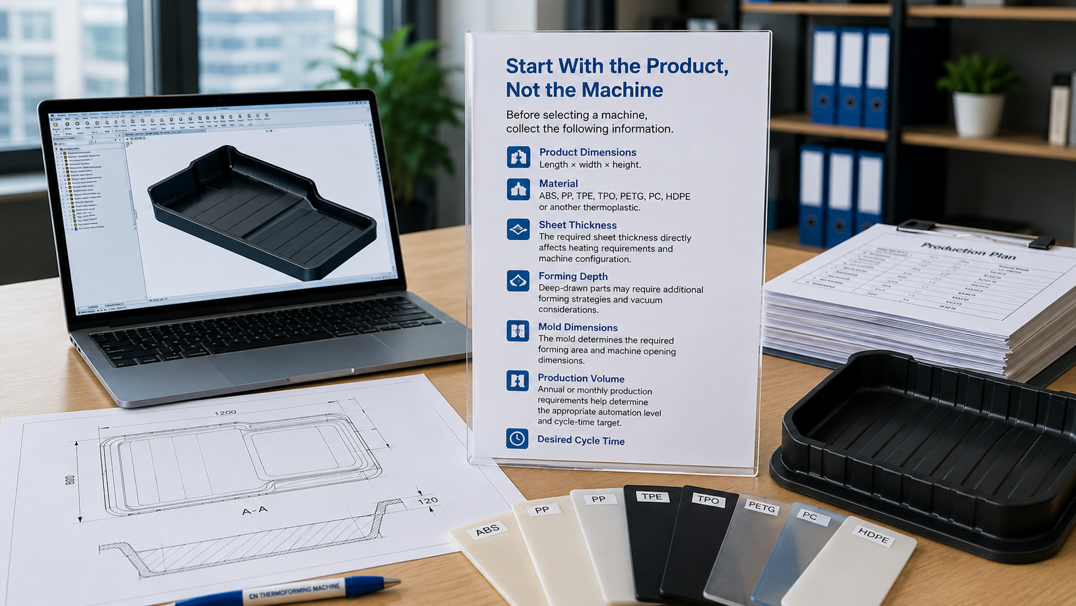
The appropriate machine size should always be determined from the actual product and mold dimensions.
A larger machine is not automatically a better machine.
The goal is to achieve the correct balance between:
Product Size + Mold Size + Sheet Size + Production Volume + Machine Cost
The thermoplastic sheet is positioned in the machine and secured by the clamping system.
The sheet is heated using controlled heating zones until it reaches the required forming condition.
Heating zones can be adjusted to compensate for product geometry and material distribution requirements.
The mold and heated sheet are brought into the forming position.
Vacuum removes air between the sheet and mold surface, drawing the material into the required shape.
The formed component is cooled sufficiently to maintain dimensional stability.
The finished part is separated from the mold.
Excess material is removed to achieve the final product dimensions.

The machine is only one part of a thermoforming system.
Mold design also influences:
Depending on the product, molds can be manufactured using different materials and construction methods.
For lower-volume applications, relatively economical mold solutions may provide a strong cost advantage.
For higher-volume production, more durable mold construction may be appropriate.
The correct mold solution depends on:
Product + Material + Production Volume + Required Life + Surface Requirements
| Factor | Heavy Gauge Thermoforming | Injection Molding |
|---|---|---|
| Large Parts | Excellent for suitable geometries | Can require very large equipment |
| Tooling Cost | Often lower for large parts | Can be high |
| Product Development | Flexible | More tooling-intensive |
| Wall Thickness | Depends on forming | Highly controllable |
| Production Volume | Low to high depending on application | Excellent for high volume |
| Large Surface Area | Strong advantage | Equipment requirements can increase |
| Product Changes | Relatively flexible | Tooling changes may be more complex |
| Material Waste | Depends on trimming and nesting | Different process characteristics |
The best process depends on product design, production volume, material, tolerances and cost targets.
Heavy gauge and thin gauge thermoforming serve different manufacturing requirements.
We do not believe one machine configuration is suitable for every thermoforming application.
Our engineers evaluate the actual product before determining the machine configuration.
Machine platforms can be designed for large components and substantial forming areas.
Equipment can be configured for thick thermoplastic sheets and demanding forming applications.
Heating, vacuum, servo, clamping, forming and automation can be adapted to project requirements.
PLC-based control and industrial components support repeatable production.
Mechanical fabrication, assembly and electrical integration are handled through our manufacturing process.
Technical assistance, operator training and spare-parts support can be provided for international projects.
A custom heavy gauge thermoforming machine can be developed according to:
Our engineers can evaluate the requirements and propose a suitable configuration.
A heavy gauge thermoforming machine heats relatively thick thermoplastic sheets and forms them into three-dimensional shapes using vacuum, pressure, mechanical forming or a combination of methods.
Depending on machine configuration and material, CN thermoforming machines can be designed for approximately 0.5–15 mm sheets.
Large-format configurations can provide forming areas up to approximately 4500 × 2000 mm, depending on the project.
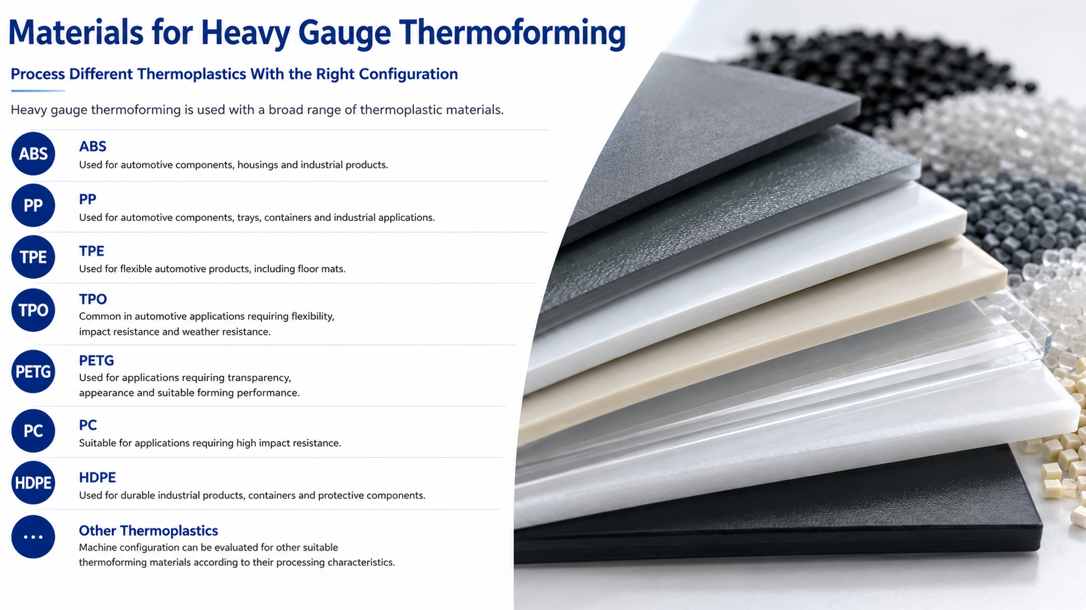
Suitable materials can include ABS, PP, TPE, TPO, PETG, PC, HDPE and other thermoplastics.
Yes. Automotive components are one of the major applications for large and thick thermoplastic forming.
Yes. Machines can be configured for TPE car mat production according to the product, mold, sheet thickness and production requirements.
Vacuum pump selection depends on mold volume, product size, forming depth, venting and desired cycle time. The vacuum system should be sized as part of the complete machine design.
Mold life depends heavily on mold material, product design, production volume, forming conditions, maintenance and demolding requirements. There is no single service-life number applicable to every mold.
Yes. Mold dimensions and forming requirements can be used to determine the machine's forming area, opening, clamping and vacuum configuration.
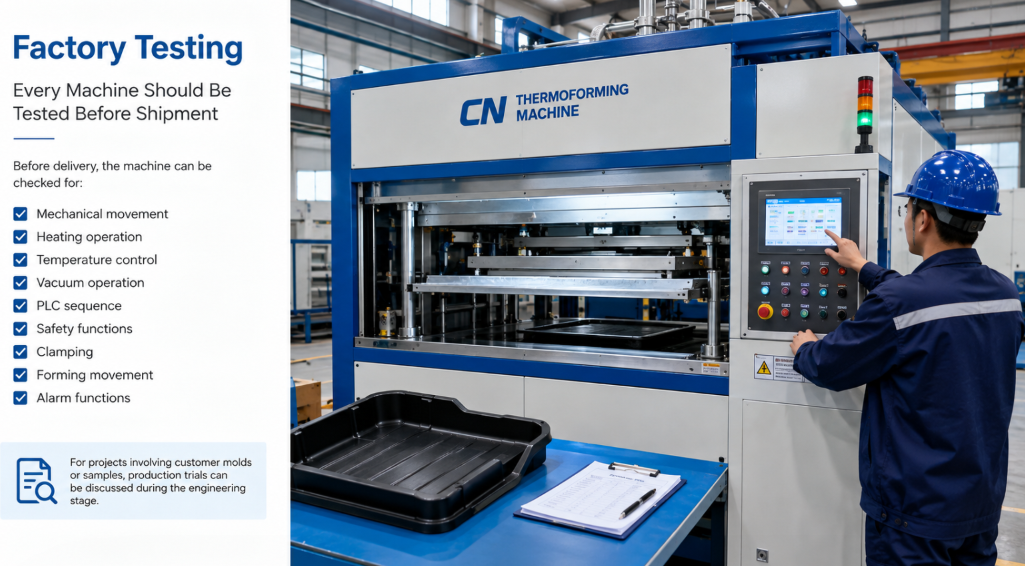
Product and mold trials can be discussed depending on the project and available tooling.
Send us your product information and let our engineers evaluate the application.